Doing Nothing For Now
If your door is making a new noise but still opens and closes the way it always has, you don't need to panic. A lot of Little Elm houses were built between 1988 and 2014, with most of that stock going up around 2003, which means a big share of the original garage door hardware in this area is now somewhere between 11 and 20+ years old. Noise is often the first sign of normal wear showing up on schedule, not a sign the door is about to fail tonight.
What you shouldn't do is ignore a noise that's changed in character over a short period - quiet to loud in a week, occasional to constant in a few days. That kind of change usually means something is loosening or wearing fast, and it's worth a look before it becomes a stuck door or a dropped panel. But a steady, low-level squeak that's been there a while and isn't getting worse can usually wait for a scheduled visit rather than an emergency call.
We won't tell you every noise needs an immediate service call. Most don't. The honest answer is that noise alone, without more context, is a weak signal - it tells you something is happening, not how urgent it is.
What Is Going On
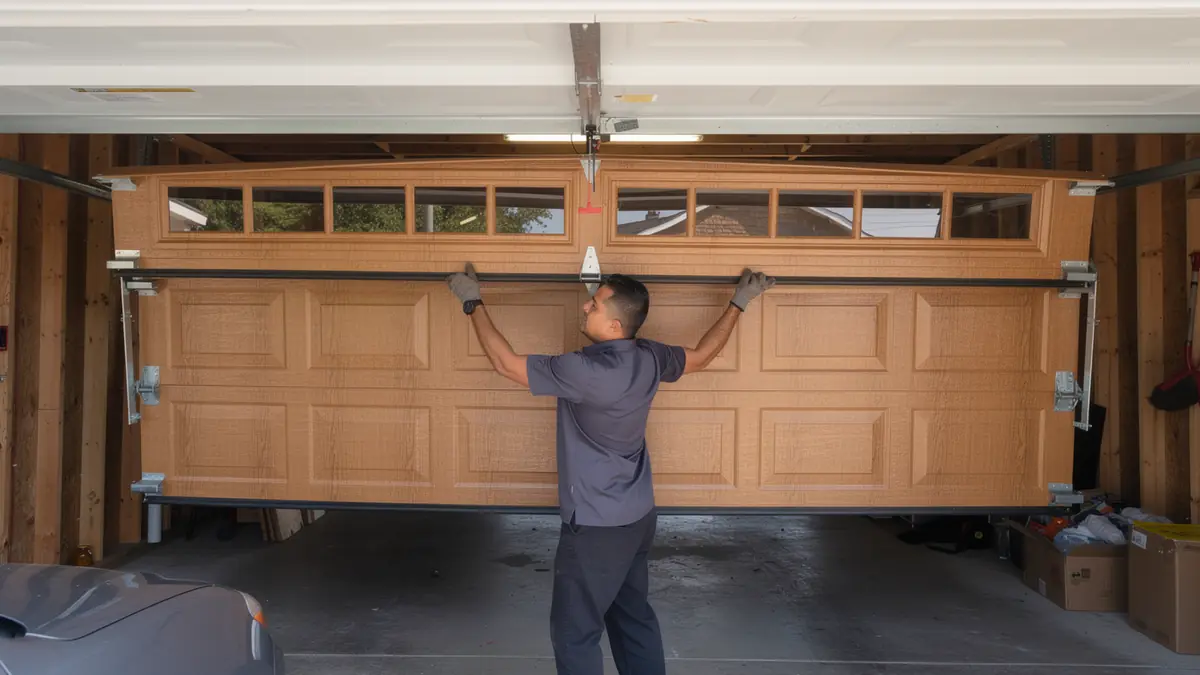
On a door installed when most of Little Elm's housing went in, the rollers are usually nylon with steel ball bearings, and the springs are either torsion or extension depending on the builder spec used at the time. Twenty-plus years of cycling - roughly two openings a day, every day - wears the lubricant off those rollers and bearings long before anything visible looks broken. Dry metal on metal, or a roller with a flat spot, is the most common source of a grinding or squealing sound on houses from this era.
A rhythmic popping or banging as the door moves is often a different story: a torsion spring losing tension unevenly, or hinges that have loosened enough to let a panel flex slightly on its way up the track. Neither of those is instantly dangerous, but both get worse with more cycles, not fewer.
A loud bang followed by the door refusing to move is usually a spring that's let go entirely. That's not a noise you live with - it's a stop-what-you're-doing signal, because a door with a broken spring is under uneven load and can come down hard if someone tries to force it.
Opener-related noise - a motor that sounds strained, or a grinding from the unit itself rather than the door - points to the gear and drive components inside the opener housing, which on a 2003-vintage install are well past any reasonable service life.
When to Call Someone
Call now if you hear a sudden bang and the door won't move, if a cable looks frayed or has come off a drum, or if one side of the door is visibly lower than the other when it's closed. Those are load-bearing failures, not lubrication problems, and they can get worse fast or hurt someone.
Call soon, not this minute, if the noise is new but the door still tracks straight and closes fully - a scheduled appointment is fine. That covers most of the squeaking and light grinding we see on doors from the 1988-2014 construction wave common across this area.
One honest limitation: we can't tell you over the phone whether a noise is a $20 lubrication job or a spring on its way out. The sound alone doesn't carry enough information, and guessing wrong either way wastes your money or risks your safety. We have to look at the door - which side is noisy, how the springs are seated, whether the rollers have visible wear - before we'll tell you what it actually needs.
If your opener is original to a 2000s-built house, replacement parts for that specific unit can be slow to source or no longer made at all. At some point, fixing one more part on a 20-year-old opener costs more than it's worth, and we'll say so rather than keep billing you for patches.
What the Weather Here Does to It
This area sits in a moderate-heat climate band, which means the metal in your door and track goes through real expansion and contraction across the year, even without the extreme highs some regions see. That cycle loosens fasteners over time and dries out lubricant on rollers and hinges faster than a door in a cooler, steadier climate would experience. It's part of why a door that was silent last spring can start talking by late summer.
Heat also affects the nylon rollers common on doors from this area's main building period - repeated heat exposure makes nylon more brittle over the years, and a brittle roller is more likely to develop the flat spot that causes a rhythmic thump as it turns. Steel rollers hold up differently, but most builder-grade installs from the 2000s used nylon.
We don't get the deep-freeze cycles that cause some of the worst spring failures in colder states, so the moderate heat here tends to show up as gradual wear - things loosening and drying out - rather than sudden cold-snap spring breaks. That's a small piece of good news: most of what you'll hear coming from a Little Elm garage door is a maintenance signal, not a weather emergency.
Talk to a local pro
Garage door trouble in Little Elm?
Same-day service with honest, upfront quotes.