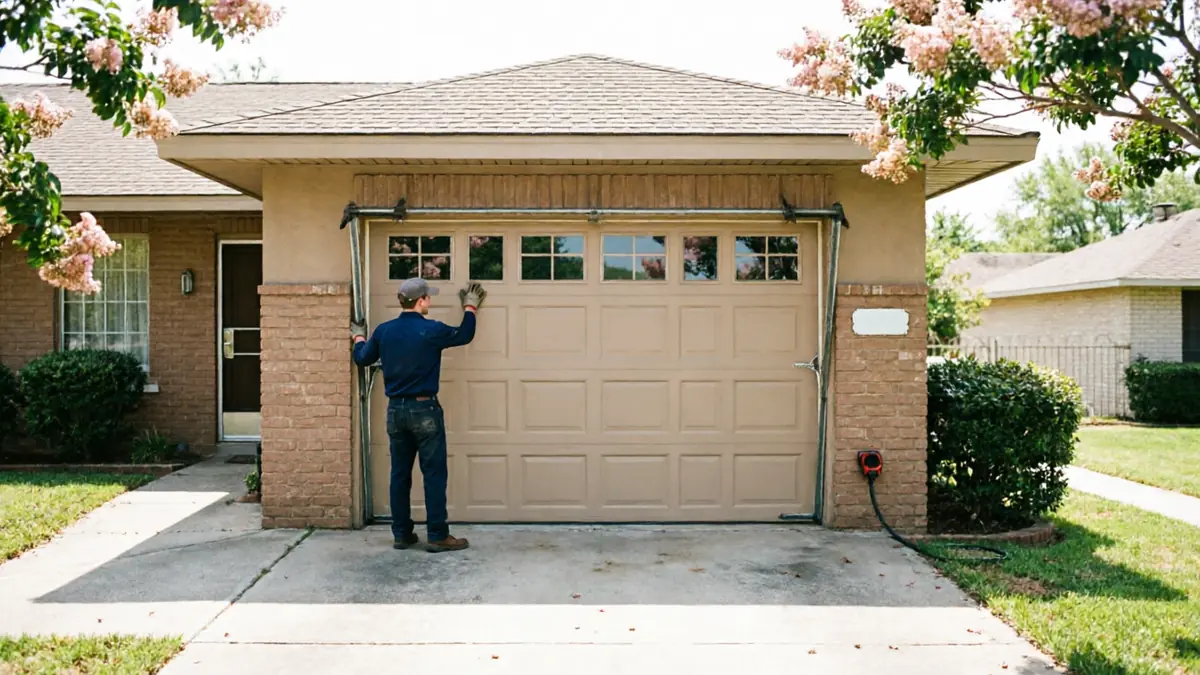
Most of the housing across this service area went up between 1988 and 2014, with the typical build year landing around 2003. That's a specific window, and it matters: builders in that boom used a lot of the same track brackets, roller hardware, and lightweight steel sections across tract after tract, in Little Elm and in the 23 other named areas that share the same build era. Twenty years later, that hardware is all aging out at roughly the same time.
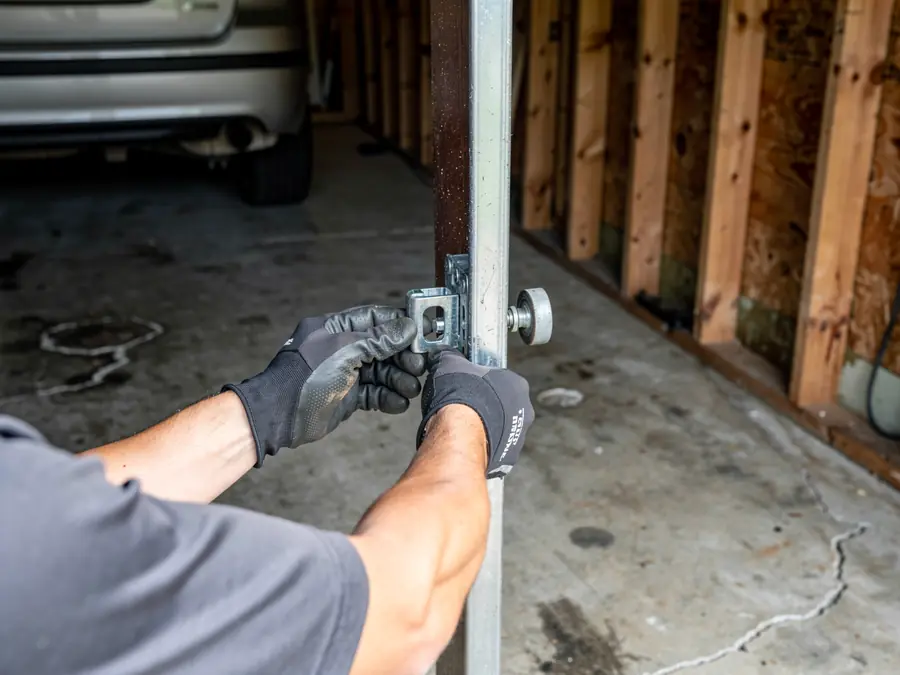
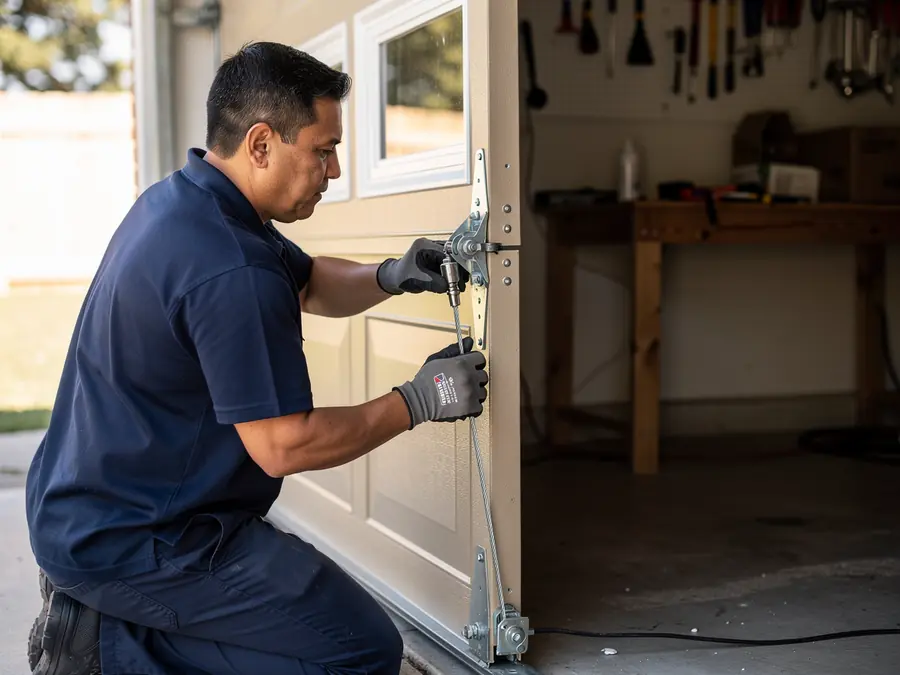
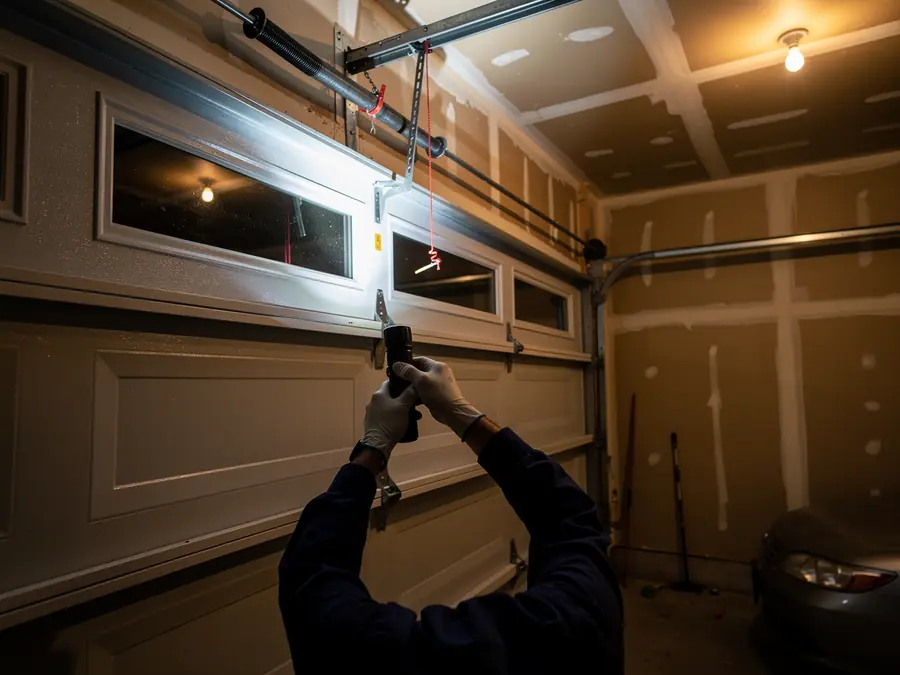
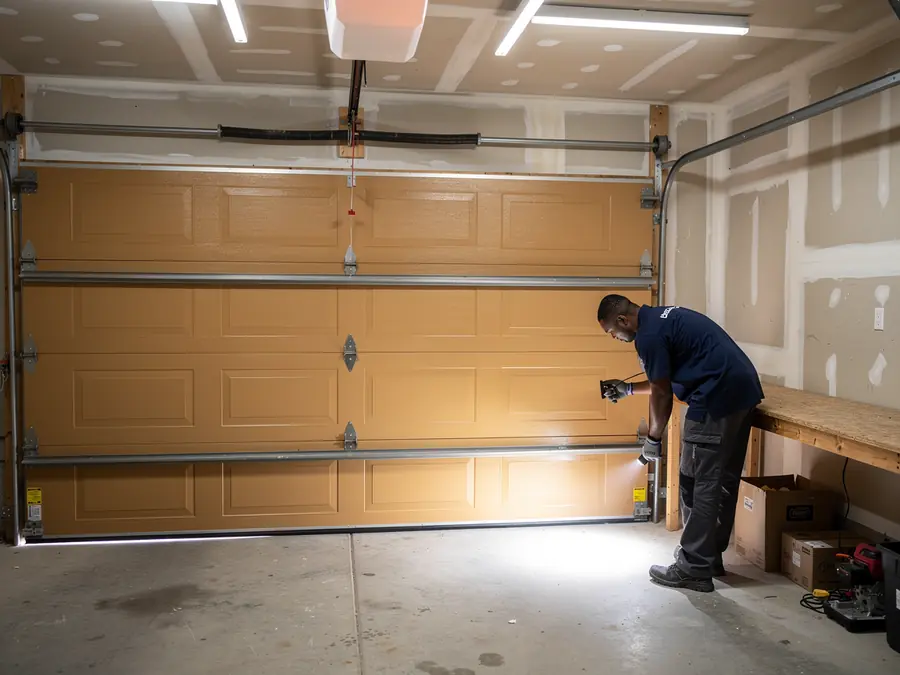
Track brackets are lag-bolted into the framing, not through-bolted, and that connection loosens with repeated door cycles. Add the local climate - a moderate heat band rather than a hard freeze-thaw cycle - and you get steady summer expansion and contraction on the track rail itself, year after year, instead of one dramatic weather event. It's a slow loosening, not a sudden crack. By the time a door jumps the track, the bracket has usually been inching away from the stud for a while, and the rollers have been riding slightly off-center long enough to wear a groove into the track wall.
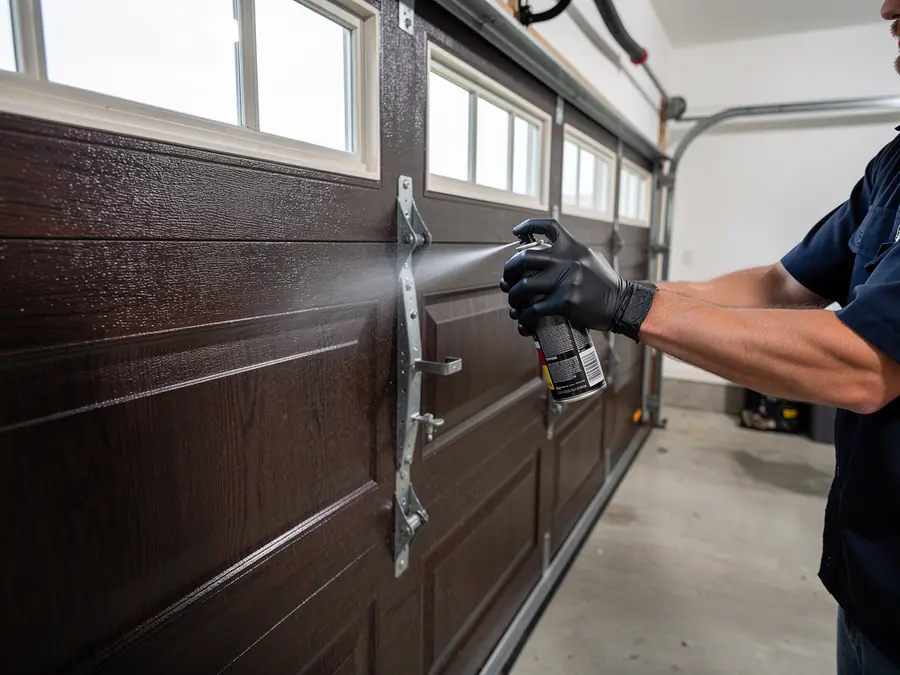
This is a wear pattern tied to age and cycle count, not a defect in any one door. A door installed in 2003 on original hardware is doing exactly what 20-plus years of garage door hardware does.