Doing Nothing For Now
Most garage doors in Little Elm were put up between 1988 and 2014, with the median build year sitting around 2003. That means a lot of the openers and torsion springs around town are now 15 to 25 years old - old enough to be tired, not so old that replacing them is automatic. If your door still opens and closes smoothly, runs quiet, and the spring hasn't visibly stretched or gapped, you don't need a call yet. A yearly look at the cables, rollers, and hinges is enough for most of these builder-grade setups. Waiting isn't neglect if the door is still doing its job. Where it stops being fine is when you hear a new noise, see the door hang unevenly, or notice the opener straining longer than it used to - those are signs the hardware installed when the house was built is nearing the end of its working life, not a reason to panic yet.
What Is Going On
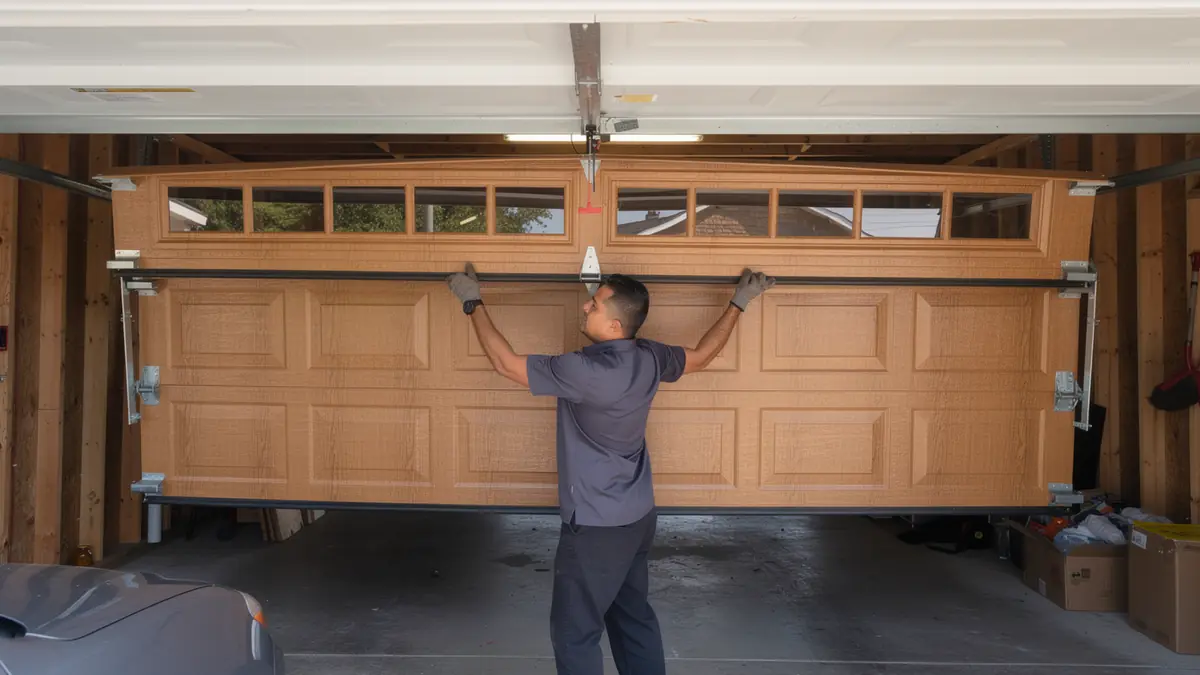
Across the 23 named areas that make up this mostly-2000s housing stock, the failures we see cluster the same way: galvanized torsion springs rated for a certain cycle count finally give out, nylon rollers from that era's builder-grade doors crack and bind in the track, and the original opener logic boards start dropping signals. None of that is unique to one street - it's the stock itself aging out together, because so much of it went in within a fairly tight 1988-2014 window. A service call starts with figuring out which of those three things is actually happening, since a bad roller can mimic a bad spring from the sound alone. We check the spring wind, track alignment, cable fray, and opener force settings in that order, because fixing the wrong part first just hides the real problem for a few more weeks.
When to Call Someone
Call if the door won't stay up on its own when disconnected from the opener - that's a spring that's lost tension and it's not a DIY fix, the springs are under real load. Call if a cable looks frayed or has popped off the drum; those don't get safer with time. Call if the door reverses on its own partway down, since that's usually the opener's force or limit settings drifting, common once an opener from the early-2000s building wave starts aging. One honest limit: if your opener is original to a 1988-2003 build and the circuit board is failing, we may tell you replacement is the better call rather than chasing parts for a board that era doesn't support well anymore.
What the Weather Here Does to It
This area sits in a moderate heat band, not an extreme one, so you're not dealing with the kind of daily thermal swing that cracks panels outright. But moderate heat held for months still does two things to doors from the 1988-2014 stock: it dries out the lubricant on rollers and hinges faster than cooler climates would, and it softens the nylon on cheaper rollers just enough that they wear unevenly under the summer load. We see more roller and lubrication calls in the hot stretch than any other single issue, more than spring failures even. It's not dramatic weather damage - it's steady heat doing slow wear on hardware that was never built for heavy-duty cycling in the first place.
Talk to a local pro
Garage door trouble in Little Elm?
Same-day service with honest, upfront quotes.