
Dry track and strain
Sometimes it's a track that's gone shiny and dry where it used to look dull and greased. Sometimes it's an opener that runs longer than it used to, straining to do what the spring used to help with.
Little Elm, TX
Garage door maintenance in Little Elm, TX, explained for 2000s-era housing stock and moderate-heat climate - what wears out first, what you can check yourself, and what it costs.
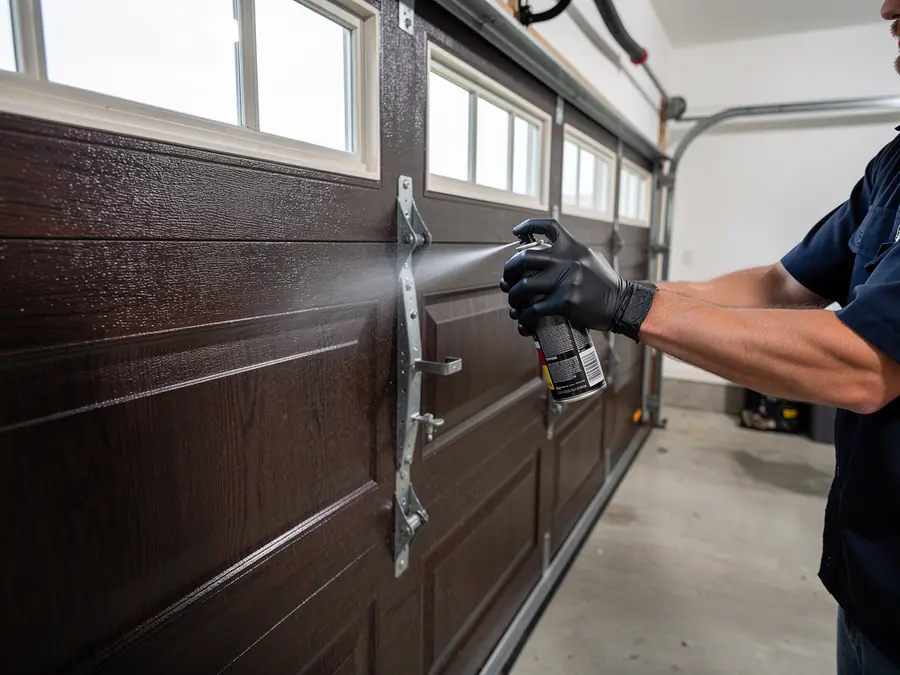
Local causes
Most of the housing across this part of the service area went up between 1988 and 2014, with the median landing around 2003. That's not ancient, but it's old enough that factory grease on torsion springs and ball-bearing rollers has had fifteen to twenty-five years to dry out, and steel fatigue doesn't care how nice the house looks from the street.
The climate band here runs moderate heat, not the brutal extremes you'd see further south or at higher elevation, but still enough summer cycling that lubricant breaks down faster than most owners expect. A spring that's wound and unwound every day in 90-plus heat for two decades is not the same spring it was in year one.
Across the 23 named areas that share this same 2000s-era construction, we see the same pattern: openers original to the house, same gauge springs, same stamped-steel rollers, all hitting end-of-service-life within a few years of each other. It's not bad luck. It's a whole subdivision built in the same decade, aging at the same rate.
A house built in 1995 and a house built in 2010 both fall inside that window, and both are due for the same kind of attention now, just at slightly different points on the curve.
Symptoms
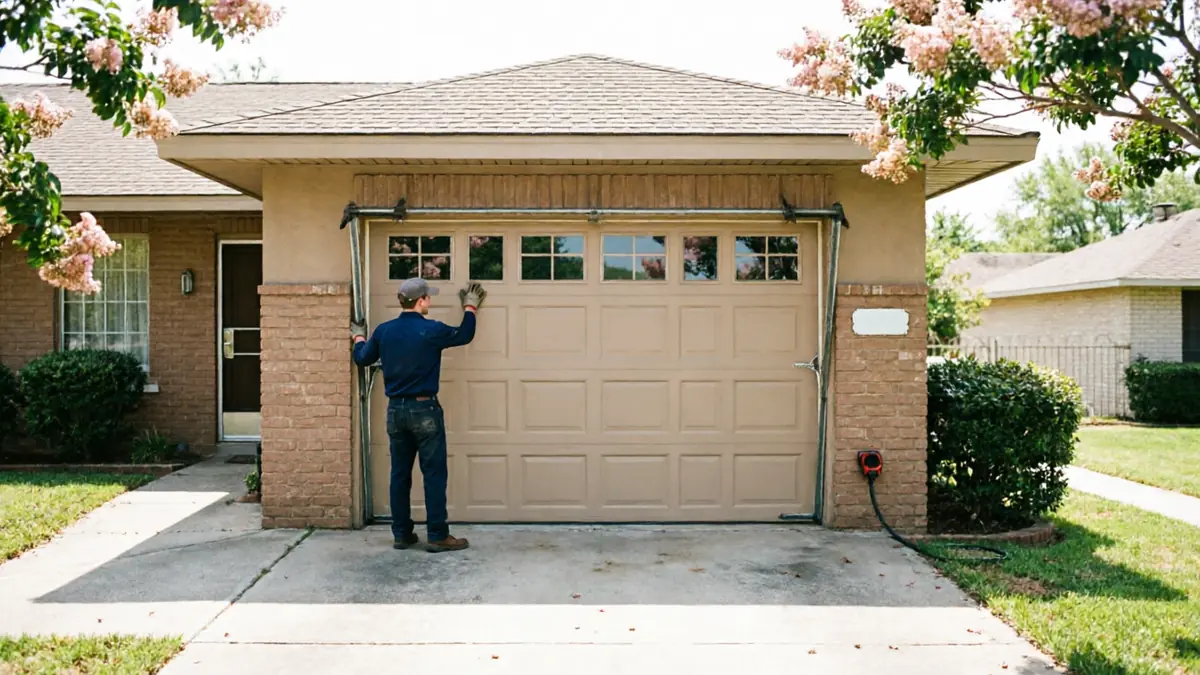
The first sign is rarely a door that won't open at all. It's a door that groans on the way up, or one side of a double door that drops half an inch before the other catches up.
Sometimes it's a track that's gone shiny and dry where it used to look dull and greased. Sometimes it's an opener that runs longer than it used to, straining to do what the spring used to help with.
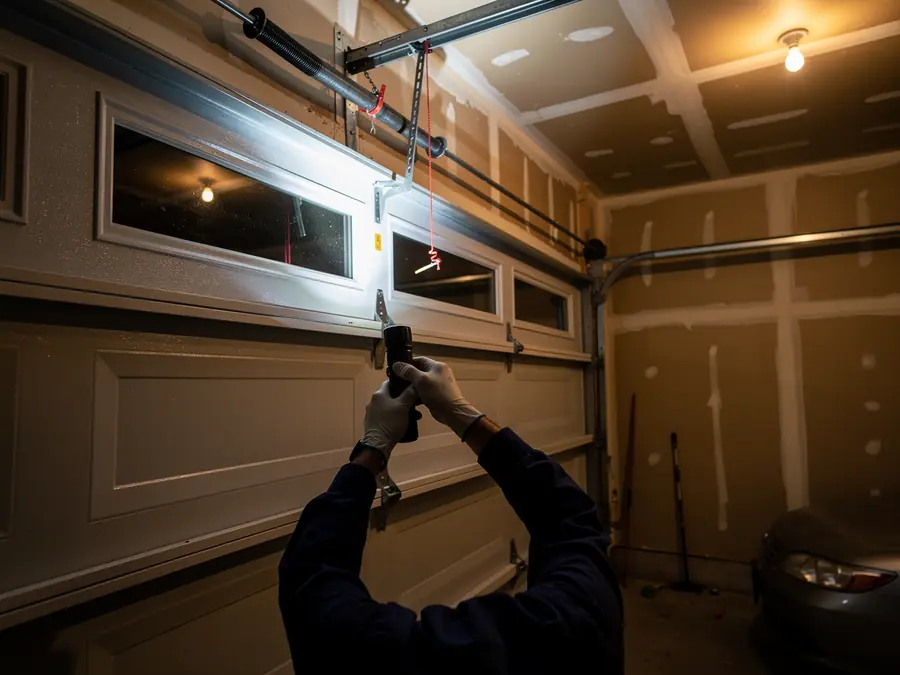
On houses from this build era, the pattern we see most is original torsion springs losing tension unevenly - one side still has some life, the other is close to snapping. That shows up as a door that racks slightly in the opening, scraping one side of the frame, before anything breaks outright.
Rollers are the other common one. Stamped-steel rollers from builder-grade installs wear a flat spot after enough cycles, and you'll hear it as a rhythmic thunk on the way up or down, once per rotation. It's not dangerous yet. It's a door telling you it wants attention before it becomes a Saturday morning emergency.
DIY or pro
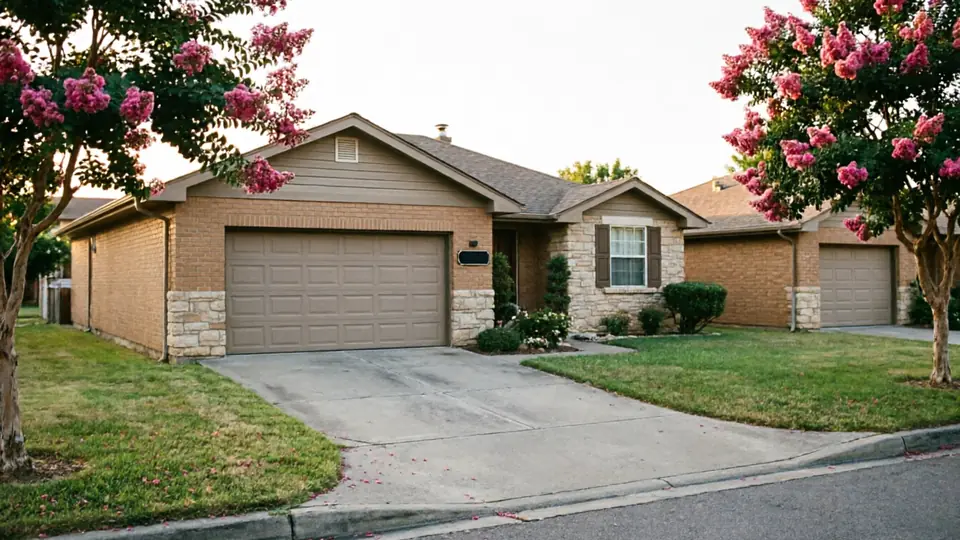
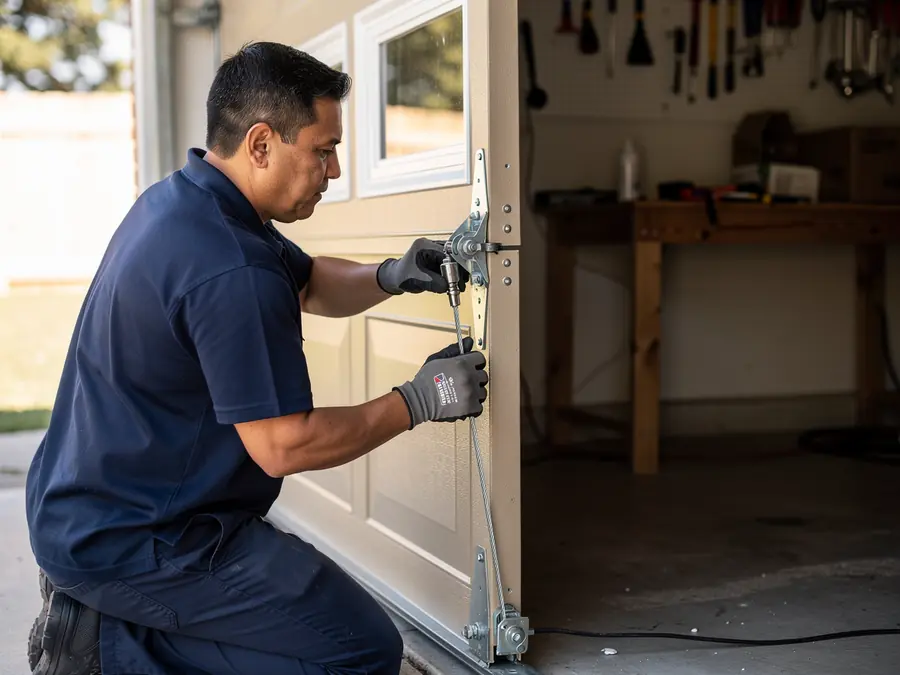
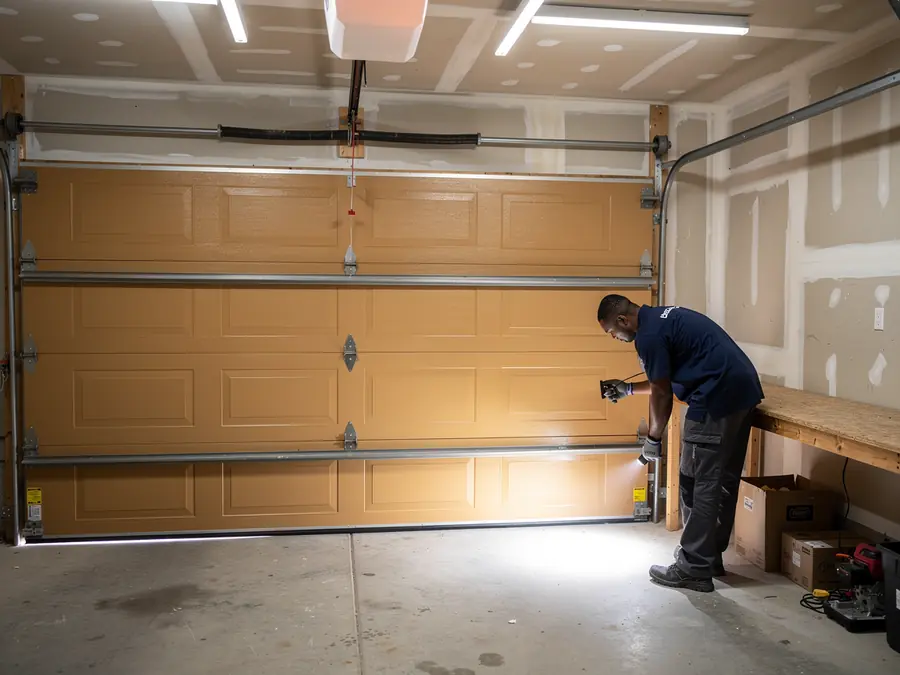
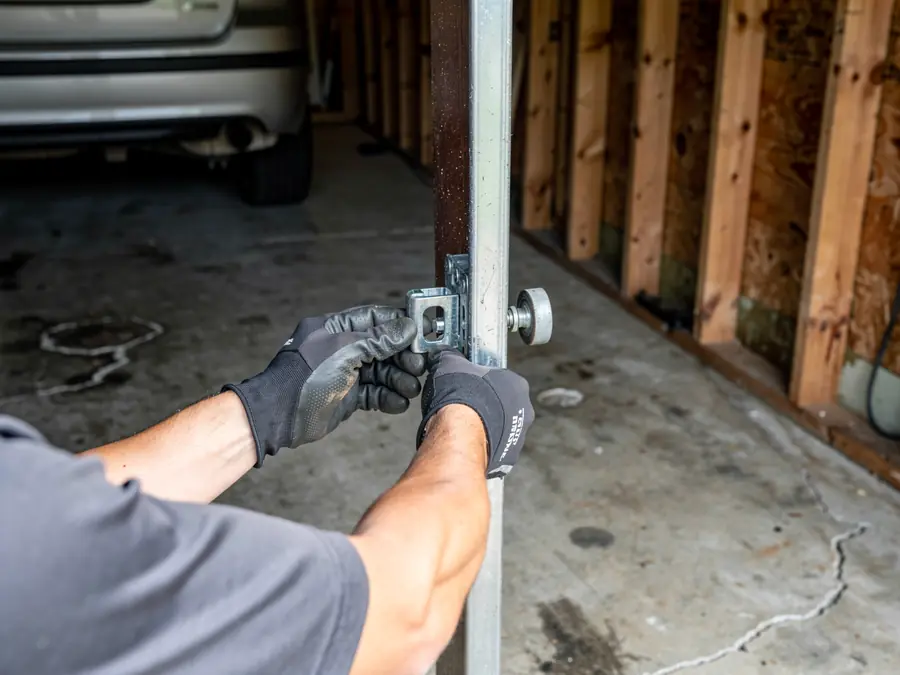
Some of this you can genuinely do yourself. Wiping down and relubricating the tracks and hinges, checking that the photo-eye sensors aren't coated in dust, tightening the bolts on the top bracket, listening for the specific sounds above - none of that needs a technician.
What you shouldn't touch is the torsion spring itself. It's under enough tension to cause a serious injury if it lets go while you're adjusting it, and on a double door there are usually two of them working together, which means an amateur adjustment on one throws off the balance of the whole door. We won't talk you through that one over the phone, and if a technician ever does, that's worth being suspicious of.
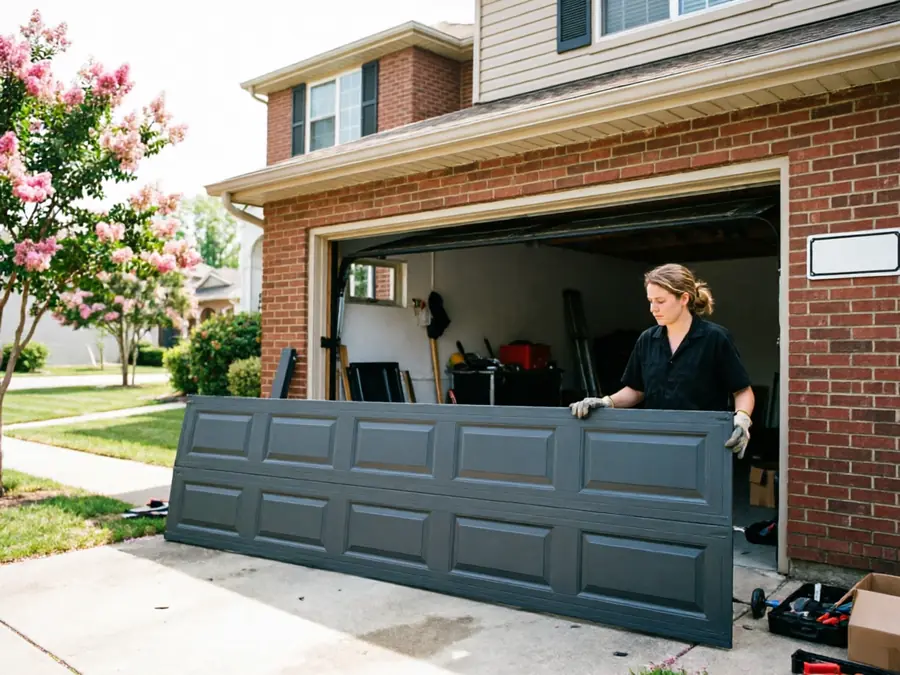
If the door is sagging, racking, or making a new noise, that's past the point where a squirt of lubricant fixes it. At that stage you're looking at a spring, cable, or roller that needs eyes on it in person, not a video tutorial.
Pricing
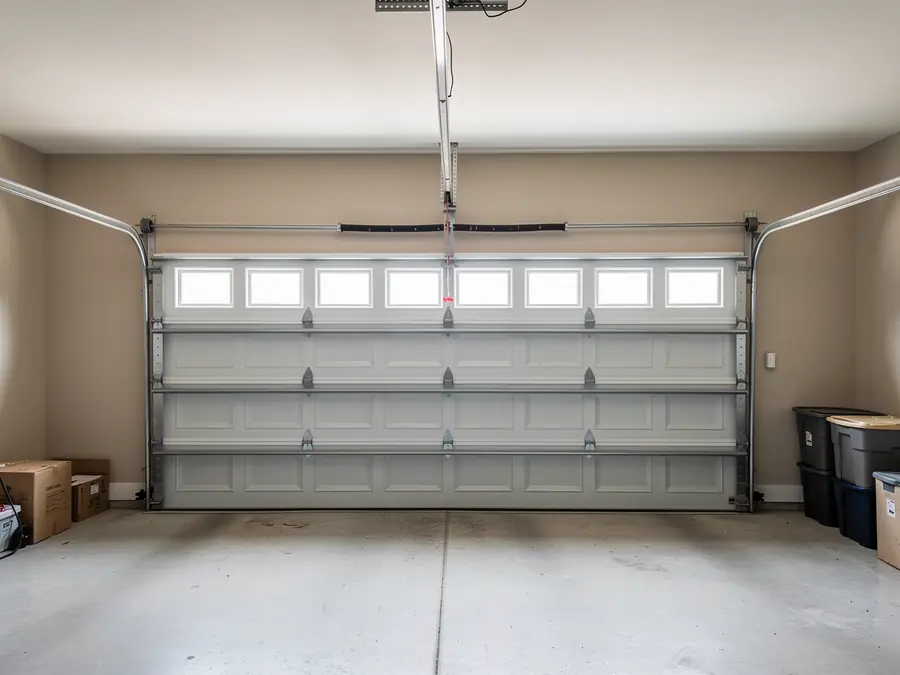
We don't publish a flat price list on this page because the honest answer depends on what's actually worn - a tune-up covering lubrication, hardware checks, and balance adjustment costs a lot less than a spring replacement, and a spring replacement on a double door with two springs costs more than one on a single door with original rollers that also need swapping.
What we can tell you is the economics behind the decision. Across this service area, median household income sits at $111,316, and most owners here are in a position to book a seasonal tune-up rather than wait for a full breakdown. A tune-up now is consistently the cheaper path compared to an emergency call after a spring snaps on a Saturday night, both in the repair bill and in the hassle of a door stuck shut.
If you want a number specific to your door, that takes a look at the actual hardware, not a guess from a web page.
Questions
Once a year is the baseline for most doors in this area given the moderate-heat climate band, though doors original to houses built in the late 1980s through the 2000s - which is most of the stock here - are often due sooner if nobody's touched them since move-in.
Because so much of the housing across this service area was built in a single tight window, 1988 to 2014 with a median around 2003. Springs, rollers, and openers installed at construction are hitting the same end-of-life point at roughly the same time across whole subdivisions.
Lubricating tracks and hinges yourself is fine and worth doing regularly. Adjusting or replacing the torsion spring is not a DIY job - it's under high tension and an amateur adjustment can injure you or throw off the balance of the whole door.
Yes, especially on a door original to a house in this build era. A tune-up catches a drying spring or a flat-spotted roller before it becomes a snapped spring or a stuck door, and it's reliably cheaper than the emergency version of the same repair.
Explore more
Ready when you are
Little Elm Garage Door Pros repairs and installs garage doors, springs and openers in Little Elm, TX and the surrounding area.