
Cable failure signs
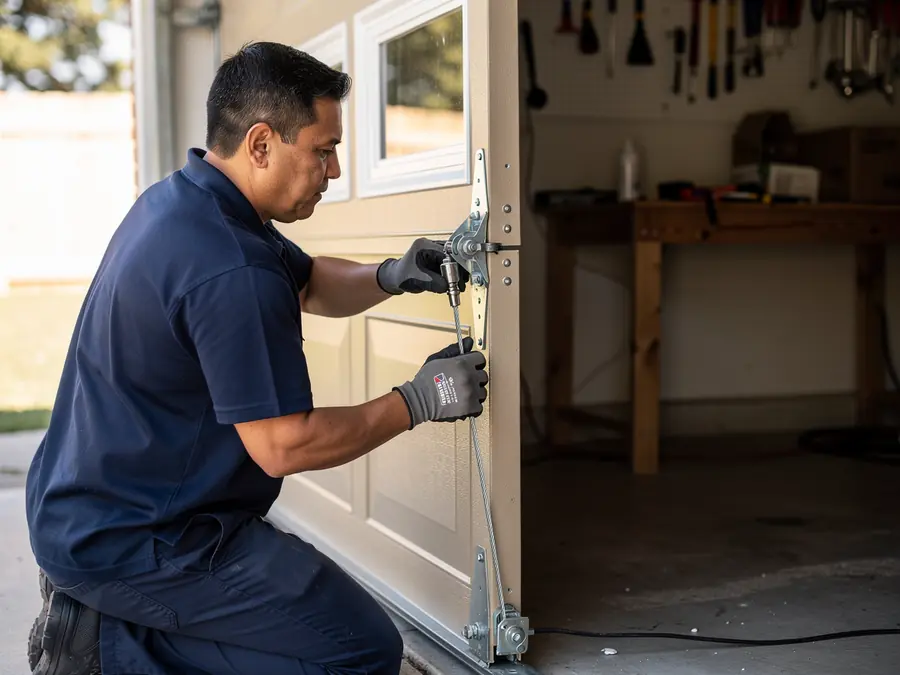
If a cable has already let go, the door won't move on the opener, or it drops fast and uneven when you try to lift it by hand.
Little Elm, TX
Cable repair for Little Elm homes built mostly 1988-2014, where original lift cables are finally reaching end of life. Same system, different fix.
Local causes
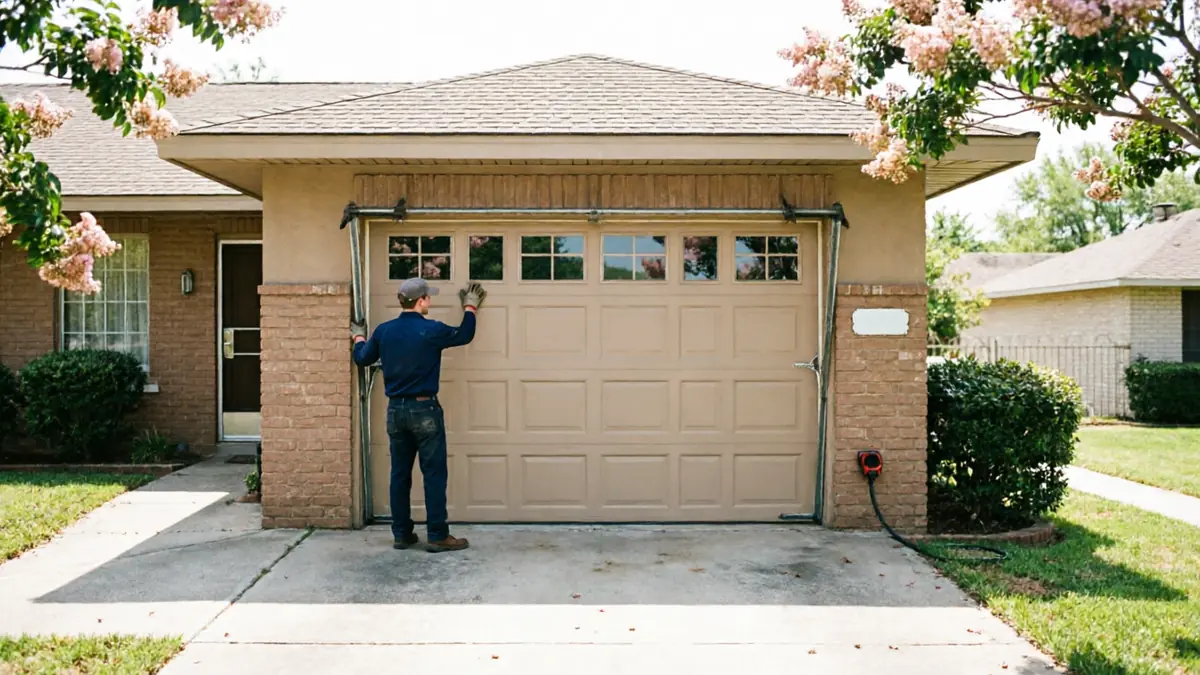
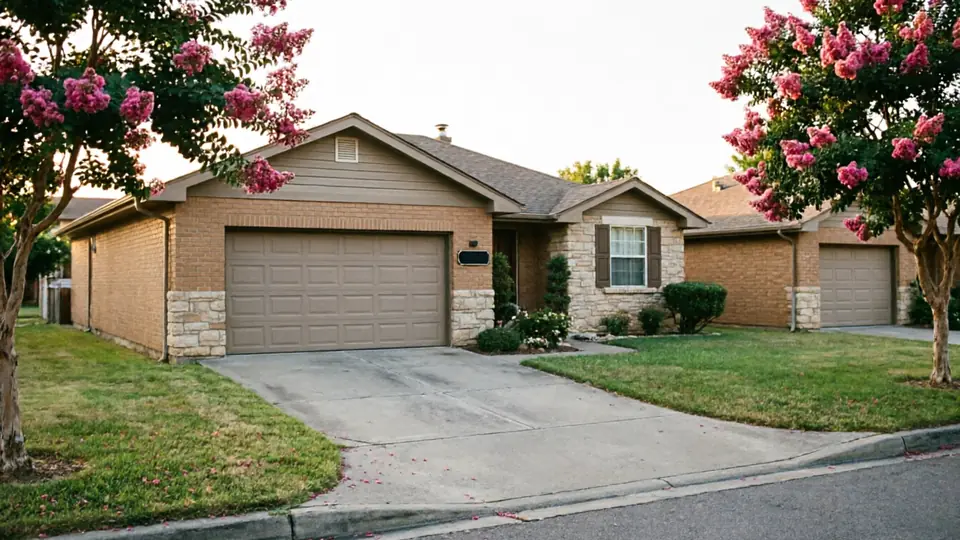
Most of the housing in this part of Denton County went up between 1988 and 2014, with a lot of it clustered around the early 2000s. That matters for cables because a cable's lifespan is tied to door cycles, not calendar years, and a door installed in 2003 has now put in two decades of daily openings on the same galvanized strand. The cable itself doesn't rot or rust out so much as it fatigues - individual wires inside the strand snap one at a time until the whole thing lets go, usually at the bottom fixture or where it wraps the drum.
Heat plays a role too. This area sits in a moderate heat band, and garage temperatures swing wide between a cold morning and a hot afternoon. That expansion and contraction works on every metal part in the system, cables included, and it's part of why a cable that looked fine in spring can snap in July. None of this is dramatic weather - no hail story, no flood - it's just thousands of open-close cycles on hardware that was never meant to last forever.
Across the 23 named areas that make up this service territory, the pattern repeats: 2000s-era builders used similar door packages, similar cable gauge, similar drums. A cable failure in one subdivision usually looks like the one three streets over.
Symptoms
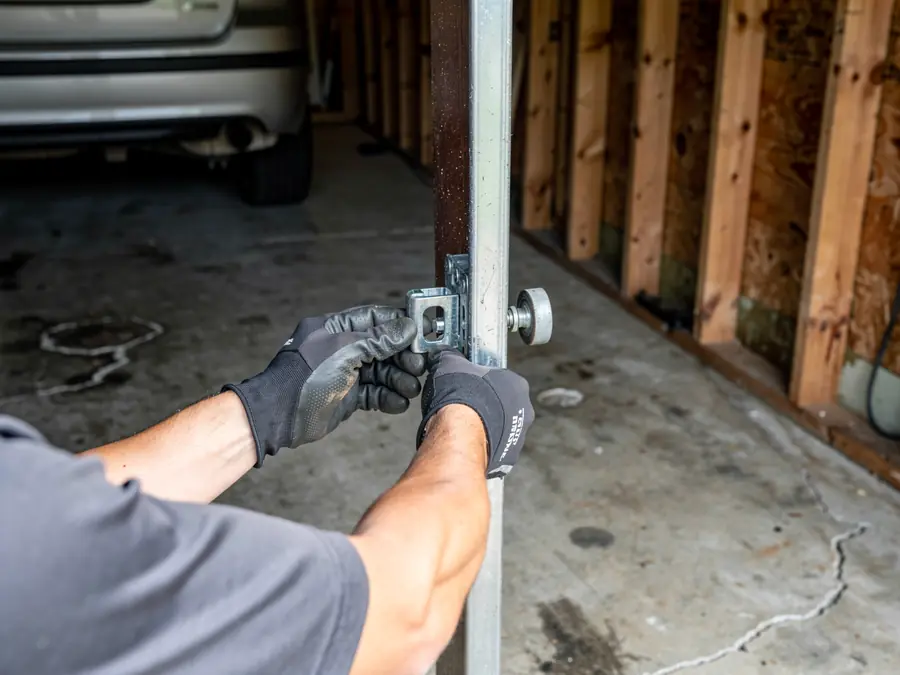
A failing cable doesn't always snap clean. Sometimes it frays first - you'll see a few strands sticking out near the bottom bracket, or notice the door hanging crooked, lower on one side than the other.
If a cable has already let go, the door won't move on the opener, or it drops fast and uneven when you try to lift it by hand.
You may hear a loud bang as the spring releases tension it can no longer hold against the broken cable. Don't confuse this with a spring problem, though the two often get blamed on each other.
Springs store the lifting force; cables transfer that force to the door. A snapped cable with a good spring still leaves you with a door that's stuck or crooked and genuinely dangerous to force open, since the tension in the spring has nowhere controlled to go.
DIY or pro
This is not a reasonable weekend fix. A garage door cable works under spring tension, and the spring on a standard residential door can hold enough force to cause a serious injury if it releases while you're working near it. Replacing a cable means first safely unloading that tension, which is the part that goes wrong for people who've done it once on YouTube and never again.
If you're set on doing something yourself before calling, the safe move is to stop using the door entirely - don't run the opener, don't force it by hand - and leave the car in the garage overnight if that's the trade-off. That costs you nothing but convenience. Trying to re-tension a spring or re-seat a cable yourself risks a lot more than convenience.
Pricing
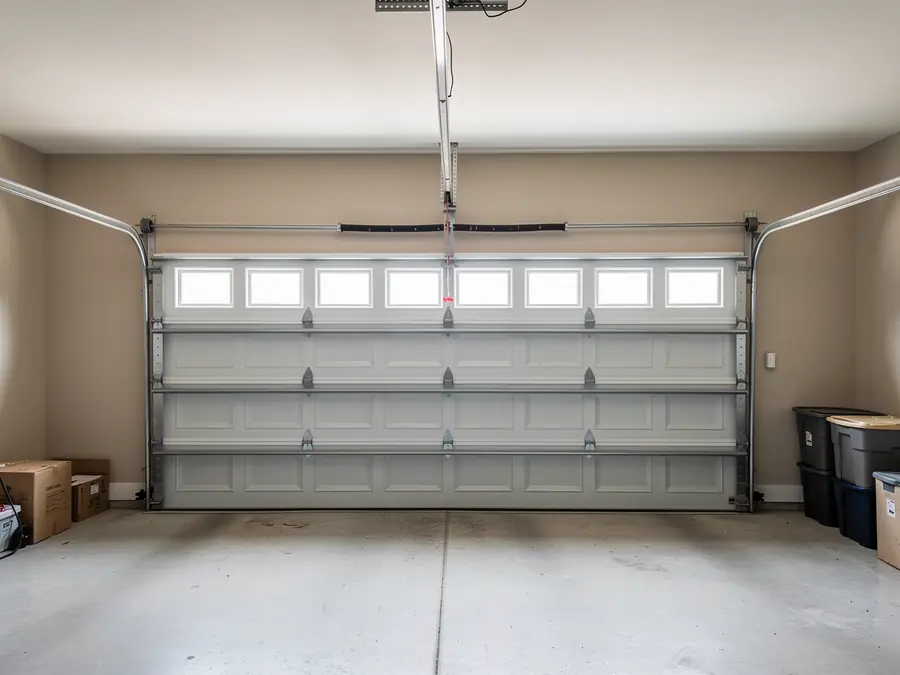
We don't have a number to post here that would hold up across every job - cable length, drum condition, and whether the spring also needs attention all change the bill, and quoting a flat figure before seeing the door would be a guess dressed up as a fact. What we can tell you is that cable repair is a smaller job than a full door replacement, and most of the time it's a same-visit fix once a tech is looking at the drum and bracket in person.
One honest limitation: if the cable snapped because the drum or track is also worn out - common on doors from the early 2000s that have never had any other part replaced - then a cable-only repair is a patch, not a fix, and we'll tell you that instead of charging you twice.
Questions
Cables usually fatigue gradually, with individual strands breaking over months, but you often don't see it until the last strand goes. Houses in this area built in the 1988-2014 window are now old enough that original cables are reaching the end of their cycle life, so a sudden snap is common rather than rare.
No. The spring stores the lifting force, the cable transfers it to the door. You can have one fail without the other, though a cable failure sometimes damages the spring assembly on the way down. A tech needs to check both before calling the job done.
If the door is down, don't force it open by hand or with the opener. The spring may still be holding tension with nothing controlling it on one side, and that's a hand or finger injury waiting to happen. Leave it closed and call for a look.
Explore more
Ready when you are
Little Elm Garage Door Pros repairs and installs garage doors, springs and openers in Little Elm, TX and the surrounding area.